
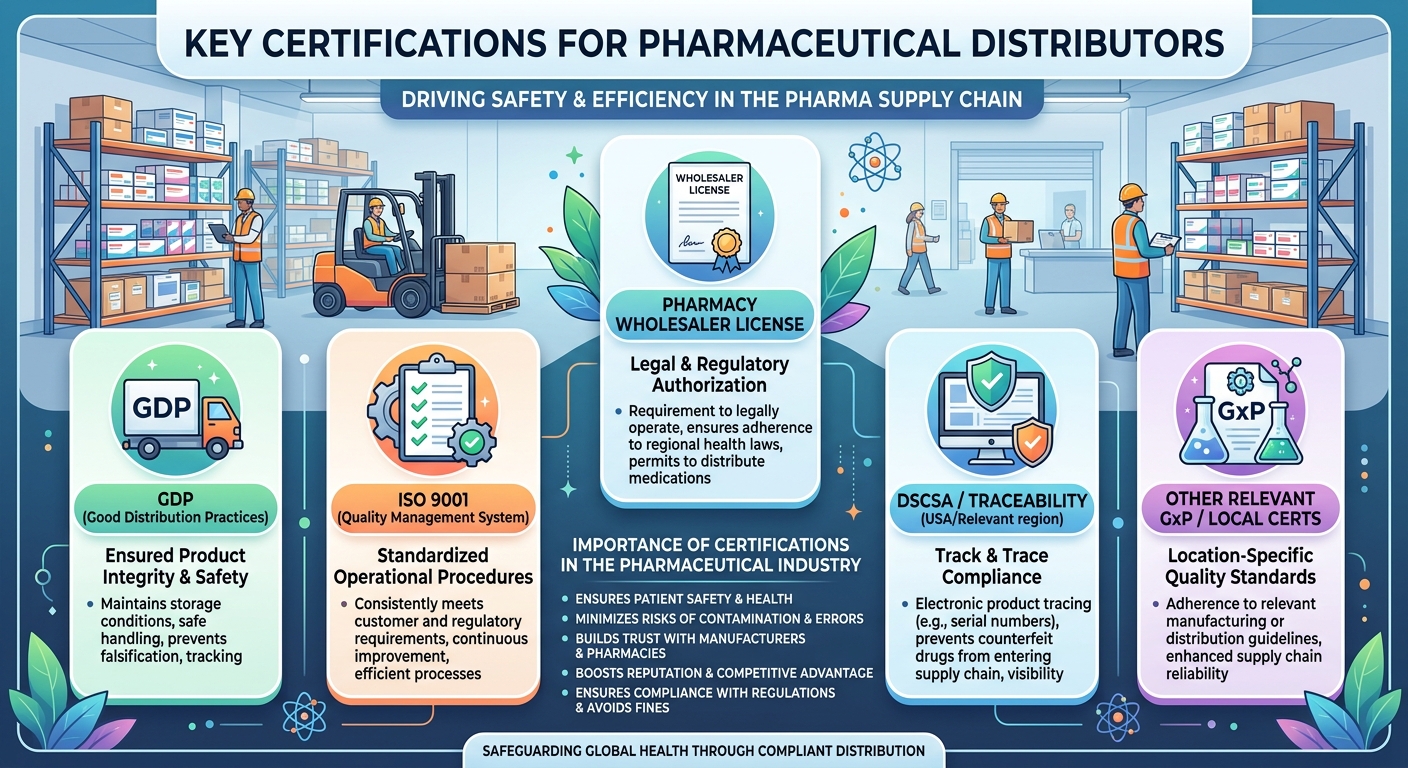
Key Certifications Required for Pharma Distributors
Introduction
In the fast-paced world of pharmaceuticals, ensuring compliance and maintaining quality standards is crucial for distributors. Certifications not only validate the credibility of your business but also ensure that you meet the necessary regulatory requirements. In this blog post, we will explore the key certifications required for pharma distributors, helping you navigate the complexities of the industry.
Why Certifications Matter in Pharma Distribution
Certifications serve as a benchmark for quality and compliance in the pharmaceutical industry. They help establish trust with your stakeholders, including healthcare providers, pharmacies, and patients. Here are a few reasons why obtaining the right certifications is essential:
- Enhances credibility and reputation
- Ensures compliance with regulatory standards
- Facilitates smoother operations and logistics
- Reduces the risk of legal issues and penalties
- Improves market competitiveness
Key Certifications for Pharma Distributors
1. Good Distribution Practice (GDP)
Good Distribution Practice (GDP) certification is vital for ensuring that pharmaceutical products are consistently stored, transported, and handled according to quality standards. This certification covers various aspects, including:
- Storage conditions
- Transportation methods
- Record-keeping practices
By achieving GDP certification, distributors can assure clients that they comply with all necessary regulations, thus minimizing the risk of product deterioration.
2. ISO 9001 Certification
ISO 9001 is a globally recognized quality management standard. For pharma distributors, this certification signifies a commitment to quality and continuous improvement. Key benefits include:
- Enhancement of customer satisfaction
- Streamlined processes and reduced waste
- Increased efficiency and productivity
Obtaining ISO 9001 certification can help distributors implement effective quality management systems that meet customer expectations.
3. National Drug Code (NDC) Registration
The National Drug Code (NDC) is a unique identifier for drugs in the United States. Pharma distributors must register their products with the NDC to facilitate tracking and ensure compliance with federal regulations. Benefits include:
- Streamlined drug tracking
- Improved inventory management
- Regulatory compliance
NDC registration is essential for distributors wishing to operate legally within the U.S. pharmaceutical landscape.
4. Drug Enforcement Administration (DEA) Registration
For distributors handling controlled substances, obtaining a DEA registration is a legal necessity. This certification ensures compliance with regulations surrounding the storage and distribution of these sensitive products. Key points include:
- Ensures adherence to federal drug laws
- Facilitates lawful distribution of controlled substances
- Reduces the risk of legal consequences
Failure to obtain DEA registration can lead to severe penalties, making it a critical certification for distributors in this sector.
5. WHO Good Distribution Practices
The World Health Organization (WHO) provides guidelines for good distribution practices to ensure quality in the pharmaceutical supply chain. This certification is especially important for distributors operating on an international scale. Benefits include:
- Global recognition of quality standards
- Improved supply chain integrity
- Enhanced product safety
WHO certification can open doors to new markets and partnerships across the globe.
Steps to Achieve Certification
Achieving these certifications requires a systematic approach. Here are the steps you can take to get started:
- Assess your current practices against certification requirements.
- Create a compliance and quality management team.
- Implement necessary changes in processes and documentation.
- Conduct internal audits to identify gaps.
- Engage with a certification body for an official audit.
By following these steps, you can enhance your chances of successfully obtaining the required certifications.
Conclusion
Obtaining the right certifications is vital for pharma distributors aiming to ensure quality, compliance, and credibility in a highly regulated industry. By prioritizing certifications like GDP, ISO 9001, and DEA registration, you can position your business for success. Don’t wait – start your certification journey today to enhance your market standing and operational efficiency!
Call to Action: Ready to take your pharma distribution business to the next level? Contact us today to learn more about how we can help you obtain the necessary certifications and ensure compliance!